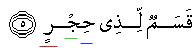
There are 2 categories as the letter
 can either be: can either be:
- Tafkheem (rough / thick) ﺗَﻔْﺨِﻴْﻢ
- Tarqeeq (soft / thin) ﺗَﺮْﻗِﻴْﻖ
To produce this sound the back of the tongue rises in the mouth. This
elevation of the tongue produces a thick or heavy sound. There are 5 categories for when the
produces a thick, round sound:
- When it carries a Fattah
 or dammah or dammah

- When it carries a sukoon
 and the letter before it carries a fattah
or dammah and the letter before it carries a fattah
or dammah
- When it carries a sukoon
and the letter before it carries a kasrah
 , and the letter after the
is a rough letter (ista'ala) that
doesn't carry a kasrah , and the letter after the
is a rough letter (ista'ala) that
doesn't carry a kasrah
- When it carries a sukoon
and the letter before it carries a 'helping' kasra (not an original kasra)
- When it carries a sukoon
as a result of wanting to stop (therefore not an original sukoon), and the letter before it is not a ya
 and carries a sukoon
, and the letter before that has either a Fattah
or dammah and carries a sukoon
, and the letter before that has either a Fattah
or dammah
 |
Click 'here' to
view practice exercises for the rules of
Tafkheem |

To produce this sound, the back of the tongue
lowers so that a flat sound is produced. There are 4 categories for when the
produces a thin sound:
- When it carries a kasrah
- When it carries a sukoon
and the letter before it carries an original kasra in the same word and a letter of
ista'ala (thick)
doesn't follow it
- When it carries a sukoon
(as a result of stopping, either in the middle or end of an ayah) and the letter before it is a
(elongated or otherwise) and the
carries a sukoon
- When it carries a sukoon
(due to stopping either in the middle or end of an ayah), and the letter before it is a letter of
istifaal (thin) which carries a sukoon
, and the letter before this carries a kasrah
|
|
Click 'here' to
view practice exercises for the rules of
Tarqeeq |

Click on the 'Summary
Chart' link on the right hand sidebar to view a summarised chart for
the rules of the letter 'RA' ()
Click here to view a printable image that summarizes the difference
between the two categories of the letter
 |